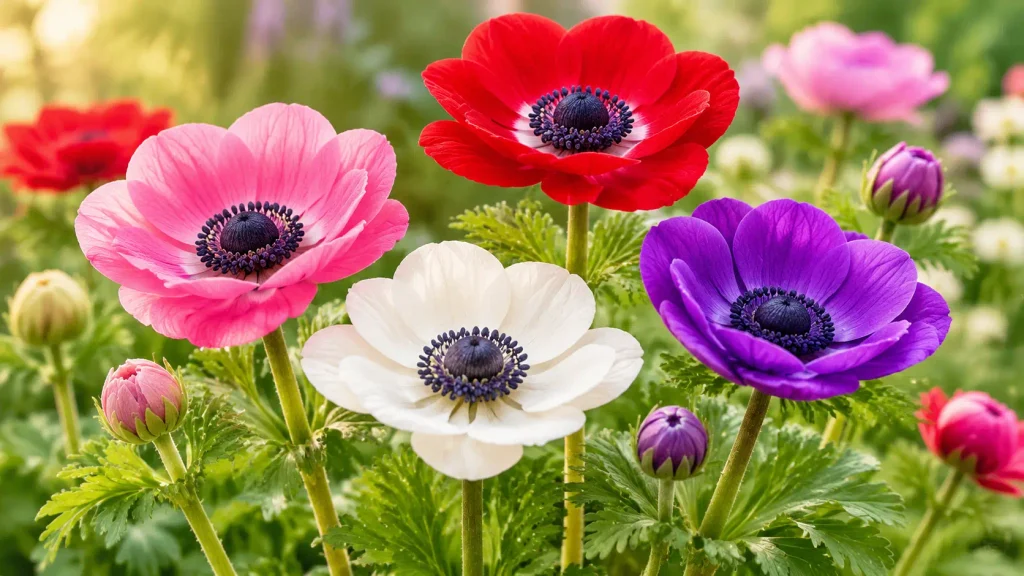
The anemone flower meaning is often connected with protection, anticipation, sincerity, and the beauty of life’s brief moments. Also called the windflower, this delicate bloom has links to Greek mythology and Victorian flower traditions. Its different colors can also express care, respect, hope, and remembrance.
[IMAGE: A beautiful arrangement of red, white, pink, and purple anemone flowers]
Anemone Key Facts
Anemones are known for their delicate petals, dark centers, and graceful appearance. Here are the main facts about these flowers.
| Feature | Details |
|---|---|
| Scientific name | Anemone |
| Plant family | Ranunculaceae |
| Common name | Windflower |
| Native to | Europe, Asia, North America, and other Northern Hemisphere regions |
| Blooms | Spring or late summer to fall, depending on species |
| Top meanings | Protection, anticipation, sincerity, and fragile beauty |
| Colors | White, pink, red, purple, blue, and yellow in different species |
| Birth month | No widely established birth month |
Anemone is a genus, which means it includes many different flower species. Their growing habits, colors, and flowering seasons can vary.
Some popular types include:
- Crown anemone (Anemone coronaria): A popular garden and cut flower with colorful blooms.
- Japanese anemone (Anemone × hybrida): A tall perennial that flowers in late summer and fall.
- Wood anemone (Anemone nemorosa): A small spring flower often found in woodland settings.
- Grecian windflower (Anemone blanda): A low-growing spring flower with blue, white, or pink blooms.
These varieties make anemones suitable for different gardens and floral arrangements.
The Story Behind the Anemone Name
The anemone has a name closely connected with the idea of wind.
The word is commonly linked to the Greek word anemos, meaning wind. This connection explains why people often call the flower the windflower.
Its delicate stems and flowers can move gently in a breeze. This natural movement adds to its soft and graceful appearance.
There is also an interesting connection between anemones and Greek mythology. One famous story links the red anemone with Adonis, a figure associated with beauty and ancient Greek myths.
According to a traditional version of the story, the goddess Aphrodite mourned Adonis after his death. The red anemone was said to have grown from his blood.
This story helped connect the flower with remembrance and the short nature of life. However, different versions of the myth exist, and this is a traditional explanation rather than a botanical fact.
What the Anemone Symbolizes
The anemone has several symbolic meanings. These meanings come from its appearance, historical traditions, and cultural stories.
1. Protection and Care
Anemones can represent protection and care in modern flower symbolism.
Their delicate appearance reminds people of something precious that deserves attention. This makes them a thoughtful choice when you want to show someone that you care.
You can include anemones in a bouquet for:
- A family member who needs encouragement.
- A friend going through a difficult time.
- Someone starting a new chapter in life.
- A person you want to appreciate and support.
Their gentle appearance makes them suitable for meaningful family gifts.
2. Anticipation and New Beginnings
Anemones can also represent anticipation and the excitement of something new.
Some varieties bloom in spring, when gardens begin to wake after winter. Their fresh colors make them a natural choice for celebrating new beginnings.
You might choose these flowers for:
- A new home.
- A graduation celebration.
- A new job or business.
- A family achievement.
- A fresh start after a difficult period.
Their seasonal growth offers a simple reminder that new opportunities can follow challenging times.
3. Fragile Beauty and Life’s Short Moments
Anemones are often associated with fragile beauty and the passing nature of life.
Their soft petals and graceful shape create a delicate appearance. The flower’s connection with the Adonis story also supports this historical association.
This meaning makes anemones suitable for thoughtful occasions. They can remind someone to value meaningful experiences and appreciate the people around them.
4. Sincerity and Thoughtful Feelings
Anemones can express sincerity and thoughtful feelings in modern floral arrangements.
Their simple yet striking appearance makes them a good choice when you want to send a meaningful message without using an elaborate bouquet.
They can represent:
- Honest appreciation.
- Respect for someone special.
- Warm family connections.
- Support during a difficult time.
- Gratitude for someone’s kindness.
These meanings are modern interpretations rather than fixed rules.
Anemone Meaning Through History
The history of anemone symbolism includes ancient stories, Victorian flower traditions, and modern floral design.
Ancient Greece
Anemones became associated with stories about Aphrodite and Adonis. In a well-known version, red anemones were connected with Adonis’s death and Aphrodite’s grief.
This association helped give the flower a place in stories about remembrance and the temporary nature of beauty.
The Victorian era
During the 1800s, people used flowers to communicate feelings through their symbolic meanings.
This practice became known as the language of flowers. Different flowers could represent different emotions, and their meanings sometimes varied between books.
In Sarah Carter Edgarton’s 1850 book, The Flower Vase: Containing the Language of Flowers, and Their Poetic Sentiments, anemone was associated with frailty.
This historical meaning reflects the flower’s delicate appearance.
Modern floral design
Today, florists often use anemones for their striking centers and attractive petals.
They are popular in seasonal bouquets, wedding arrangements, garden designs, and thoughtful gifts.
Their symbolism is flexible. People may choose them to express appreciation, remembrance, encouragement, or simply a love of beautiful flowers.
Spiritual and Cultural Meaning of the Anemone
The anemone has different associations in historical stories and modern spiritual interpretations. These meanings should be understood as traditions and personal beliefs, not scientific facts.
Anemones in Greek Mythology
Greek mythology provides one of the best-known historical associations of the anemone.
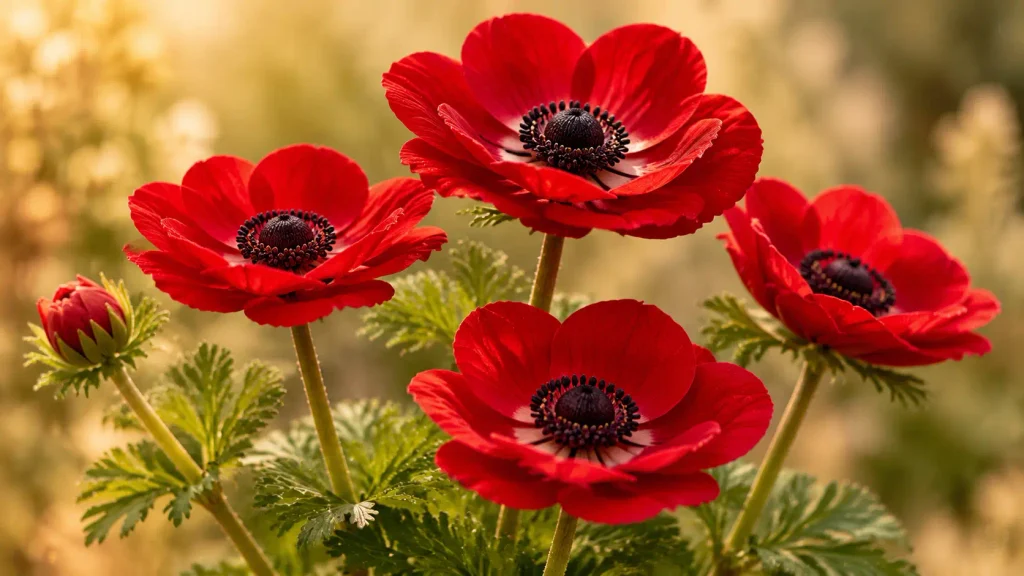
The flower is linked with Aphrodite and Adonis in traditional accounts. According to one version, red anemones appeared where Adonis’s blood fell.
This story connects the flower with remembrance, grief, and the temporary nature of life.
It also explains why some people choose red anemones for arrangements that express deep respect.
Anemone Spiritual Meaning Today
In modern spiritual flower symbolism, anemones are sometimes connected with protection, hope, and personal reflection.
Some people see their delicate flowers as a reminder to appreciate life and care for the people around them.
Others connect their seasonal growth with fresh beginnings and personal growth.
There is no single established religious meaning for anemones. Their spiritual associations depend on individual beliefs and cultural interpretations.
Anemones in Victorian Language of Flowers
The Victorian language of flowers gave anemones a more specific meaning.
In Sarah Carter Edgarton’s 1850 flower dictionary, the anemone represented frailty.
This meaning was connected with the flower’s delicate nature. However, Victorian flower dictionaries did not always agree, so it is best to identify the source when discussing historical meanings.
Today, people may use anemones to express appreciation, remembrance, and thoughtful care.
Anemone Color Guide
Anemone colors can add different feelings to a bouquet. However, most modern color meanings are flexible floral interpretations rather than universal cultural rules.
[IMAGE: Close-up collection of white, pink, red, purple, and blue anemone flowers showing their dark centers]
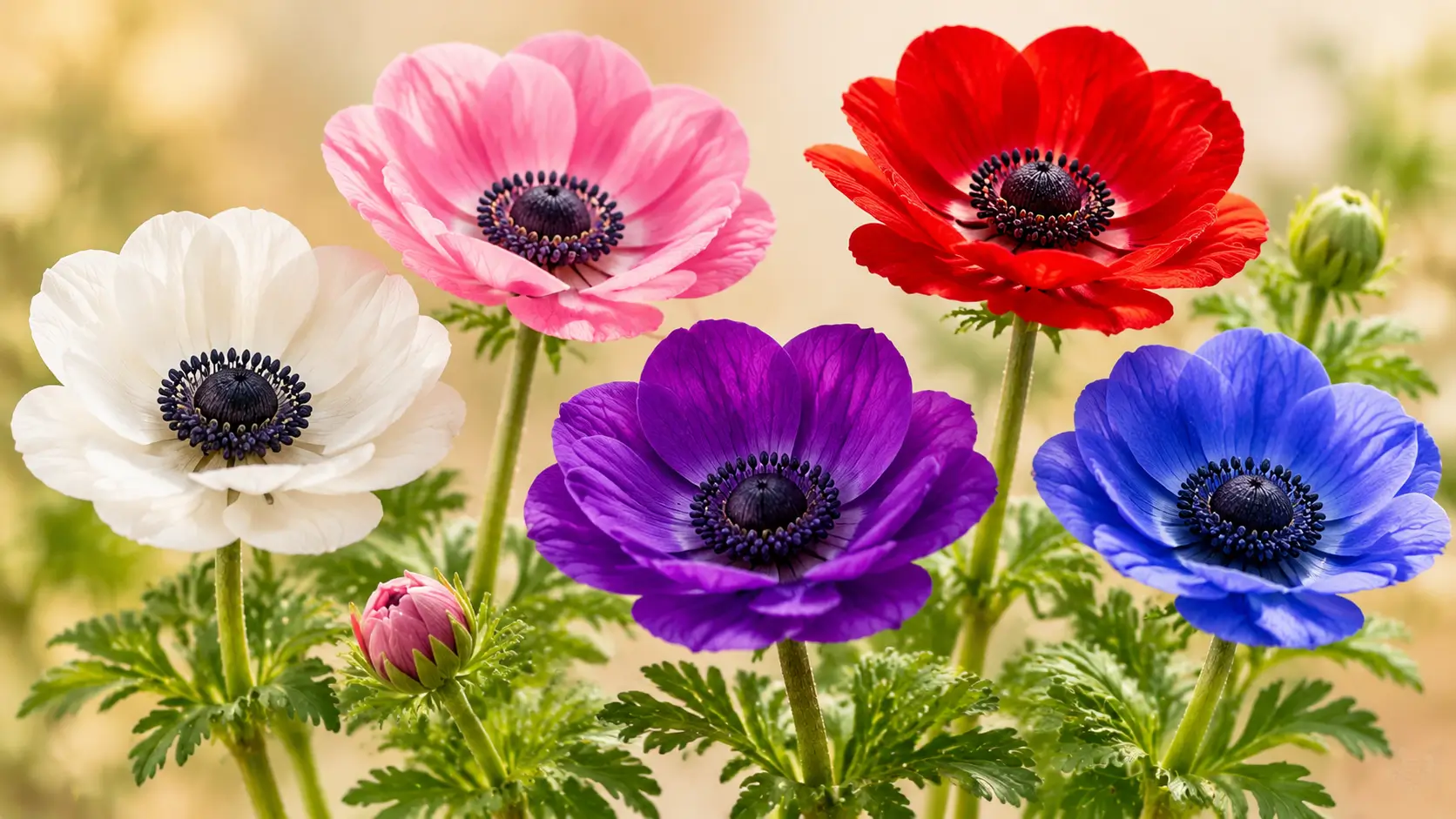
| Color | Meaning | Best for | Avoid when |
|---|---|---|---|
| Red | Deep appreciation, remembrance, and strong feelings | Meaningful family gifts and remembrance arrangements | You want a very soft, neutral look |
| White | Peace, sincerity, and respect | Sympathy, family occasions, and simple bouquets | You want a bold, colorful arrangement |
| Pink | Gentleness, care, and admiration | Friends, family, and thank-you gifts | You prefer a formal, dramatic style |
| Purple | Dignity, creativity, and respect | Special celebrations and thoughtful gifts | You want a simple traditional color scheme |
| Blue | Calm, peace, and reflection | Encouragement and peaceful arrangements | You need a warm, bright color palette |
Red Anemone Flower Meaning
Red anemones can represent remembrance and deep appreciation.
Their historical connection with the Adonis story gives them an association with loss and the temporary nature of life. They can also add warmth and depth to a meaningful bouquet.
White Anemone Flower Meaning
White anemones are often chosen to express peace, sincerity, and respect.
Their clean appearance makes them suitable for sympathy arrangements and family gatherings. They also work beautifully in simple floral displays.
Pink Anemone Flower Meaning
Pink anemones can represent gentleness, kindness, and care.
Their soft color makes them a lovely choice for thanking someone or celebrating a family achievement.
Purple Anemone Flower Meaning
Purple anemones can suggest dignity, creativity, and admiration.
They add depth to floral arrangements and pair well with white and pink flowers.
Blue Anemone Flower Meaning
Blue anemones can represent calmness and peaceful feelings in modern color symbolism.
Their cool shades create a gentle appearance. They can be a thoughtful choice when you want to send an encouraging message.
Not every anemone species naturally comes in every color. Available shades depend on the species and cultivated varieties.
Giving Anemones: Do’s and Don’ts
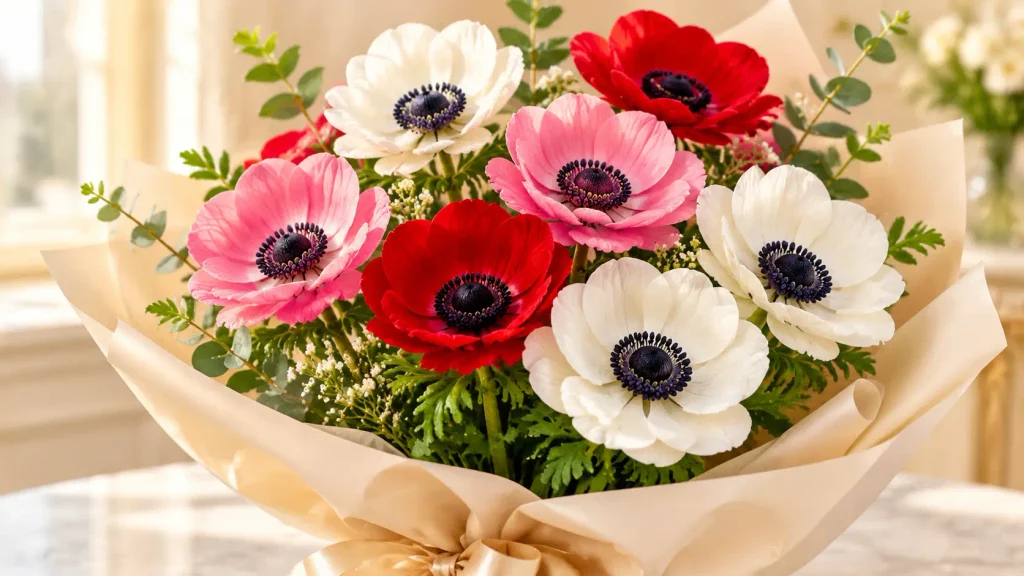
Anemones can make thoughtful gifts because they combine attractive colors with several symbolic associations.
However, choosing the right variety and arrangement can make your gift more meaningful.
[IMAGE: Elegant white and pink anemone bouquet wrapped in simple neutral paper]
Do’s
- Choose white anemones for a peaceful and respectful arrangement.
- Select pink varieties for family appreciation and thoughtful gifts.
- Use red varieties when you want a deeper, more meaningful appearance.
- Combine anemones with seasonal flowers for a natural arrangement.
- Consider the recipient’s favorite colors and personal preferences.
Don’ts
- Do not assume every color has the same meaning in every culture.
- Avoid presenting modern color symbolism as an established historical fact.
- Do not leave fresh flowers within reach of pets.
- Avoid overcrowding anemones with too many decorative flowers.
- Check the recipient’s preferences before choosing a strong color combination.
Which Occasions Are Suitable for Anemones?
| Occasion | Suggested color | Why it works |
|---|---|---|
| Family celebration | Pink and white | Gentle and welcoming appearance |
| Graduation | Purple and white | A thoughtful way to mark achievement |
| Sympathy | White | A peaceful and respectful appearance |
| Thank-you gift | Pink | Expresses care and appreciation |
| New home | Mixed colors | Celebrates a fresh beginning |
| Garden gift | Seasonal varieties | Offers lasting enjoyment when planted |
Anemones can also be combined with roses, tulips, ranunculus, and other seasonal flowers.
Anemone Tattoo and Art Meaning
Anemone designs can represent delicate beauty, remembrance, and the importance of meaningful moments.
People may choose this flower for artwork because of its simple petals and distinctive dark center.
A red anemone design can reflect remembrance. A white design may suggest peace, while pink and purple designs can express care or admiration.
In floral artwork, anemones also work well in watercolor illustrations, botanical prints, and minimalist designs.
Their meaning depends on the person’s own connection with the flower.
Are Anemones Safe for Kids and Pets?
No, fresh anemone plants should not be treated as safe for children or pets to eat.
Anemone species contain ranunculin, a natural plant compound that can produce an irritating substance called protoanemonin when plant tissue is damaged.
This substance can irritate the mouth and digestive system.
Are Anemones Toxic to Cats and Dogs?
Anemones have recognized toxicity concerns for animals. Veterinary plant references describe possible irritation, excessive salivation, vomiting, and diarrhea after ingestion.
The ASPCA maintains a toxic and non-toxic plant database for cats, dogs, and horses. However, its database is not a complete list of every plant, so check the exact species name rather than assuming every anemone variety has the same listing.
Keep anemones away from pets and young children. If ingestion occurs, contact a veterinarian for appropriate guidance.
Dried plant material may have different toxicity characteristics from fresh material, but it should not be considered safe to eat.
Growing Anemones at Home
Anemones are attractive garden plants, and many varieties can grow successfully with suitable conditions.
Their care depends on the species. Some grow from tubers, while others spread through roots or rhizomes.
[IMAGE: Anemone flowers growing in a sunny garden with green foliage and rich well-drained soil]
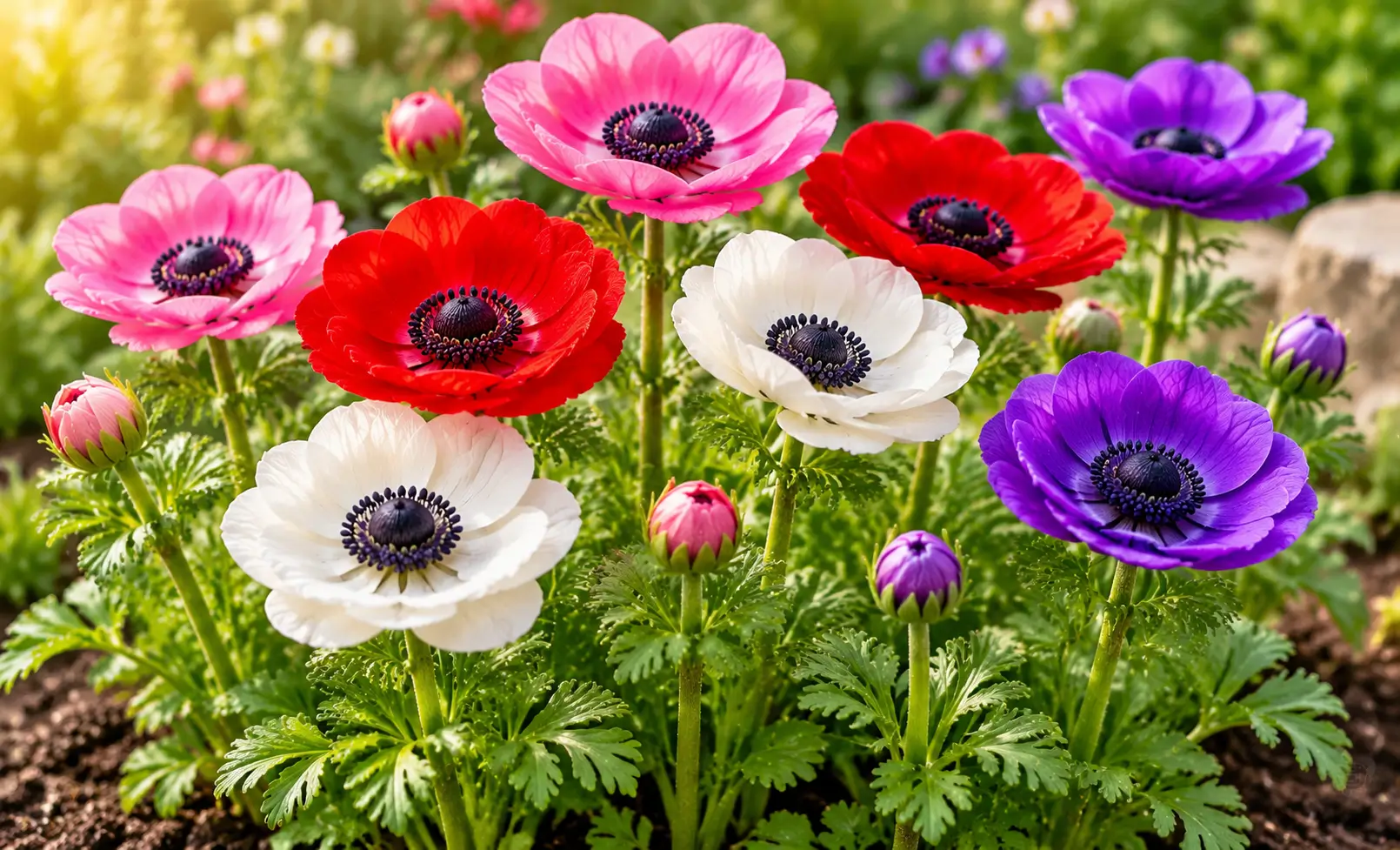
Basic Anemone Growing Requirements
| Growing factor | General requirements |
|---|---|
| Light | Full sun to partial shade, depending on species |
| Water | Regular moisture; avoid waterlogged soil |
| Soil | Fertile, well-drained soil |
| USDA zones | Varies by species; Japanese hybrids commonly grow in zones 4–8 |
| Bloom time | Spring or late summer to fall, depending on variety |
Three Tips for Growing Healthy Anemones
1. Choose the Right Location
Select a location according to your anemone variety.
Japanese anemones generally prefer partial shade and moist, well-drained soil. Spring-flowering varieties may need different growing conditions.
2. Avoid Waterlogged Soil
Anemones need suitable drainage.
Too much standing water can damage their roots or underground growing structures. Choose soil that holds some moisture without becoming soggy.
3. Give Plants Enough Space
Some anemones spread as they grow.
Japanese anemones can spread through underground growth. Give them enough room so they do not crowd nearby plants.
When Do Anemones Bloom?
The flowering season depends on the species.
- Spring varieties often bloom during spring.
- Crown anemones commonly flower in spring.
- Japanese anemones usually flower in late summer and fall.
This variety makes it possible to enjoy anemone flowers during different parts of the growing season.
Fun Facts About Anemones
Here are some interesting facts about these beautiful flowers.
- They are called windflowers: The name is commonly connected with the Greek word for wind.
- They belong to the buttercup family: Anemones are members of Ranunculaceae.
- They have many species: The genus includes numerous flowering plants with different growth habits.
- Their flowering seasons vary: Some bloom in spring, while others flower in fall.
- Their centers are distinctive: Many varieties have dark central areas surrounded by colorful petals.
- They have historical symbolism: Victorian flower dictionaries associated anemones with frailty.
- They feature in Greek mythology: Traditional stories connect red anemones with Aphrodite and Adonis.
- They work in gardens and bouquets: Their different sizes and colors make them useful for several floral designs.
Common Questions
1. What does an anemone flower mean?
The anemone flower meaning is commonly associated with protection, anticipation, sincerity, and fragile beauty. Its historical meanings also include frailty and remembrance.
2. What does an anemone symbolize spiritually?
In modern spiritual interpretations, anemones can represent protection, hope, and appreciation of life. These meanings are personal and traditional rather than established religious teachings.
3. What do different anemone colors mean?
White can suggest peace and respect, pink can represent gentleness, red can express remembrance, purple can suggest dignity, and blue can represent calmness.
These are flexible modern interpretations.
4. What does a white anemone represent?
White anemones are often associated with peace, sincerity, and respect. They are a suitable choice for simple bouquets and respectful floral arrangements.
5. Are anemones associated with Greek mythology?
Yes. Traditional Greek stories connect the red anemone with Aphrodite and Adonis. One version says the flower grew where Adonis’s blood fell.
6. Are anemone flowers suitable for sympathy?
Yes. White and red anemones can be used in sympathy arrangements. Their associations with respect and remembrance make them thoughtful choices.
7. Are anemones toxic to cats and dogs?
Fresh anemone plants contain compounds that can irritate animals. Ingestion may cause excessive salivation, vomiting, or diarrhea. Keep them away from pets and check the ASPCA plant database.
8. When do anemone flowers bloom?
It depends on the variety. Crown anemones and many other spring types flower during spring, while Japanese anemones generally bloom in late summer and fall.
9. How long do anemone flowers last?
Their vase life varies with the variety, freshness, and care they receive. Cut anemones can often last around a week or longer under suitable conditions, but results vary.
10. Can you grow anemones at home?
Yes. Many anemone varieties grow well in home gardens. Choose the right species, provide suitable light, and use well-drained soil.
Final Thought: Understanding the Anemone Flower Meaning
The anemone flower meaning brings together protection, anticipation, sincerity, and fragile beauty. Its delicate appearance and historical connection with Greek mythology give it a special place in flower symbolism. Different colors also offer thoughtful ways to express appreciation, respect, and remembrance. You can choose white anemones for peaceful arrangements, pink ones for family gifts, or red varieties for meaningful occasions. They are also lovely additions to home gardens when grown in suitable conditions. Whether you give them to someone special or grow them yourself, anemones offer a beautiful reminder to appreciate life’s meaningful moments.